Can You Stack Shipping Containers? How to Do It Safely
November 9, 2026
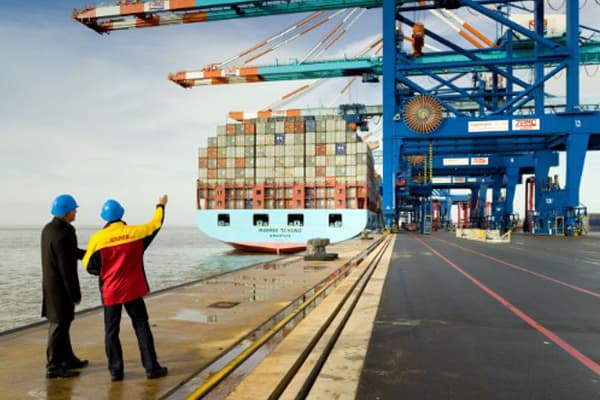
Yes — shipping containers are engineered to stack, and they do it through their corner castings, the reinforced cast-steel blocks at each corner that carry the entire load. Stacked correctly — corners aligned, twist locks in place, on a level foundation — containers ride the ocean many tiers high; on land, two to three high is the practical ceiling for most storage setups.
The corners do all the work
A container's strength lives in its frame, not its skin. The four corner posts and the castings at their ends are built to carry the weight of fully loaded containers above them. The corrugated walls add rigidity, but the roof is thin sheet steel that is not designed to carry weight. That gives you the single most important stacking rule: casting must sit on casting. An offset stack that rests a container's weight on the roof panel below it will deform the roof and can fail outright.
Twist locks and connectors
At sea, every container in a stack is joined to its neighbors with twist locks — steel fittings that drop into the corner castings and rotate to lock the boxes together — plus lashing gear on the lower tiers. On land you should use the same hardware. Twist locks stop a stacked container from creeping or lifting in wind, and they are inexpensive relative to what they protect. For containers set side by side, bridge fittings and clamps keep a row behaving as one unit.
Foundations and alignment
Stacking multiplies the point load at each corner, so the ground matters more with every tier. The base container should sit on a level foundation — concrete piers or footings under all four castings are the standard approach — so the frame stays square and the doors keep working. If the bottom box twists on soft or uneven ground, every container above it inherits the problem.
How high should you go on land?
| Scenario | Practical guidance |
|---|---|
| Single container | Level gravel pad or corner blocking |
| Two high, storage | Twist locks, level footings, aligned castings |
| Three high, storage | Twist locks plus an engineering review of soil and wind exposure |
| Any occupied structure | Licensed structural engineer and permits, no exceptions |
Ocean stacks go far higher, but they are engineered systems — the ship's cell guides and lashing do work your yard can't. For unoccupied storage, two high is routine, three high deserves professional eyes, and anything people will occupy — offices, retail, container homes — must be designed by a licensed engineer. We supply the containers; local contractors and engineers handle the builds.
One practical note: a tilt-bed truck delivers one container at ground level, so stacking on your site requires a crane or a large forklift. Plan the lift before the boxes arrive — our delivery guide covers site access.
The short version
Containers stack safely when corner castings sit directly on corner castings, twist locks join each tier, and the base sits on a level foundation. Keep land stacks to two or three high for storage, and bring in a licensed engineer for anything occupied. Shop conex boxes or buy a shipping container with a free guaranteed-lowest-price quote — buy, rent, or rent-to-own — and we'll deliver in 3–7 business days.
Related articles
- How to Insulate a Shipping Container
- Shipping Container Weights & Specs: Tare, Payload and Max Gross
- Shipping Container Modifications: Doors, Windows, Power and More