Specialty Shipping Containers: Open-Top, Flat-Rack, Side-Opening and More
November 9, 2026
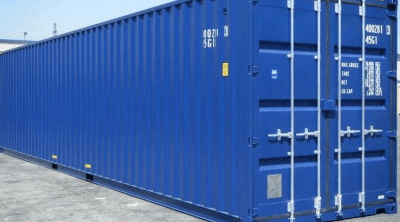
Specialty shipping containers — open-top, flat-rack, open-side, double-door, refrigerated and insulated units — exist for loads and layouts a standard box can't handle: crane loading from above, oversized machinery, forklift access along the whole wall, drive-through loading and temperature control. They share the standard container's corner-casting steel frame and 8' width, so they deliver, sit and stack on a site exactly like a regular unit.
Open-top: load from above
An open-top container swaps the fixed steel roof for removable bows and a heavy tarpaulin. Crane operators lower in machinery, scrap, gravel or timber that would never fit through end doors, and over-height cargo can ride proud under the tarp. If your loading plan starts with the words "lower it in," this is your box.
Flat-rack: when the walls get in the way
A flat-rack is essentially a reinforced steel floor with end walls — often collapsible — and no sides or roof. It carries what nothing else can: excavators, boats, transformers, steel coils and anything wider than the standard 8' container width. Cargo is chained to lashing points rather than enclosed, so flat-racks are haulers, not storage units.
Open-side: a wall of doors
Open-side containers add full-length bi-fold doors along one long wall. A forklift can reach any pallet directly instead of unloading half the box to find it, which is why they're popular for pop-up retail, market stalls, tool cribs and workshop conversions where everything needs to stay reachable.
Double-door: access from both ends
Double-door units — often called tunnel containers — carry a full set of cargo doors at each end. They shine for pass-through loading, splitting one box into two separate storage zones, or any layout where backing out is a problem. Our guide to container doors covers the hardware in detail.
Refrigerated and insulated
A refrigerated container (reefer) is an insulated box with a built-in cooling unit that holds a set temperature for produce, meat, pharmaceuticals or event catering — see our refrigerated containers page. An insulated container is the same shell without the machinery: it tames temperature swings and condensation for sensitive dry goods without needing power.
| Type | Access point | Typical use |
|---|---|---|
| Open-top | Roof (removable tarp) | Crane-loaded machinery, scrap, aggregates |
| Flat-rack | Open sides and top | Oversized equipment, vehicles, steel |
| Open-side | Full-length side doors | Pallets by forklift, retail, workshops |
| Double-door | Both ends | Pass-through loading, split storage |
| Refrigerated | End doors, powered | Cold chain, produce, events |
| Insulated | End doors, no power | Temperature-sensitive dry goods |
Sizes and condition
Most specialty types come in 20ft and 40ft lengths, with high-cube versions (9'6" tall instead of 8'6") where the extra foot of height earns its keep — the full run-down is on our container sizes page. One-trip units cost more but arrive in near-new condition; sound used units can be the smarter buy for plain storage duty. Either way, specialty containers are scarcer than standard boxes, so availability varies by region and it pays to lock in a quote early.
The short version
Open-top loads by crane, flat-rack carries the oversized, open-side gives a forklift access to every pallet, double-door loads from both ends, and reefers hold temperature. All share standard container geometry — 8' wide, 20ft or 40ft long, 9'6" in high cube. Shipping Container World supplies every type nationwide with tilt-bed depot delivery in 3–7 business days, backed by Marketplace Protection. Get a free guaranteed-lowest-price quote to buy, rent or rent-to-own.
Related articles
- How to Insulate a Shipping Container
- Shipping Container Weights & Specs: Tare, Payload and Max Gross
- Shipping Container Modifications: Doors, Windows, Power and More